What does a market swing cost your petrochemical margin?
Learn how petrochemical producers steer output toward margin while demand, feedstock prices, and carbon costs keep moving.
How does petrochemical supply chain planning protect profitability in a volatile market?

Crackers never stop, and every ton of ethylene, propylene, and butadiene they make needs a buyer. The best buyer shifts constantly, and the plan that chose one was drawn up long before the market moved.
Demand now moves faster than plants can react. Capacity growth in China and the Middle East pressures prices for European and US output, and closures of the Strait of Hormuz in 2026 sent naphtha and LNG prices swinging for months. Carbon cost is becoming as volatile as feedstock.
A plan built on last cycle's assumptions can't keep up. You commit output against conditions that have already changed, and every ton sent to the wrong buyer costs margin that a faster decision would have kept.
Value-driven planning steers every ton to its best margin
Value-driven petrochemical supply chain planning directs each product toward the best margin and the right buyer, within the limits of plants, contracts, and sustainability commitments. It replaces a one-time search for better markets with a weekly routine of testing scenarios and re-routing output.
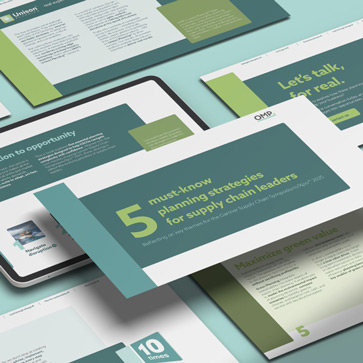
What's inside the e-book
- Why demand, price, and carbon cost squeeze margins differently in Europe, the US, Asia-Pacific, and the Middle East
- How a reality-based digital twin changes planning for continuous, campaign, and batch production in the chemicals industry
- How scenarios test price shifts, contract changes, shortages, and logistics disruptions before you commit to a plan
- How UnisonIQ, the AI framework inside Unison Planning™, speeds up scenario evaluation and explains its trade-offs in plain language
Petrochemical producers already planning this way
BASF's petrochemicals division is rolling out Unison Planning™ for Chemicals across its production plants. Evonik Oxeno moved tactical planning from scattered spreadsheets to one platform, which now generates hundreds of what-if scenarios a week instead of a handful a month. Arxada replaced spreadsheet-based planning across its specialty chemicals network, and Solvay is bringing demand, tactical, operational, and scheduling planning into a single model.
How Unison Planning™ for Chemicals works
Unison Planning™ for Chemicals plans cracking, campaign, and batch production in one model, so you see how a change at one plant affects margin across the value chain. A reality-based digital twin recalculates flows and compositions as reactor temperature, pressure, or production rate changes, and scenarios are compared by business value before anyone decides.