
Decision-centric planning
Conquer supply chain volatility with decision velocity
What is decision-centric planning? | How OMP delivers it | How it works | Real results | Voices from the field | Next steps
Your supply chain makes thousands of decisions. How many of them are made well and fast enough?
A disruption hits on a Tuesday. A tariff is announced mid-cycle. An S&OP decision waits three weeks while the world moves on in three hours. A familiar issue is rebuilt from scratch, as if the organization has never seen it before.
Supply chains don’t break because planners lack intelligence. They break because decision quality collapses under pressure and decision velocity can’t keep up with reality.
Traditional planning was built for a slower world. One where decisions could wait for the next cycle. That world is gone.


What is decision-centric planning?
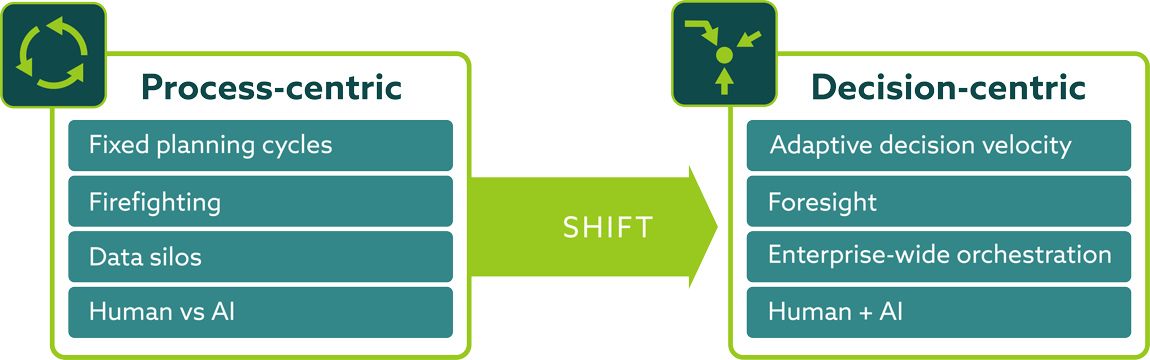
Decision‑centric planning shifts the focus of supply chain planning from producing plans to making better decisions.
Instead of relying on static, calendar‑based cycles, it enables organizations to:
- Anticipate change before it hits
- Use external signals to drive decision events
- Act quickly, without sacrificing decision quality
The goal is not speed alone. It’s decision velocity and decision quality, together.


From firefighting to proactive control
In a reactive model, disruption triggers manual analysis, fragmented decisions, and delayed action. In a decision-centric model, the response is already prepared: scenarios ready, trade-offs understood, decisions moving immediately into execution.
The difference isn't better planning. It's better decision readiness.
How OMP delivers decision-centric planning at scale
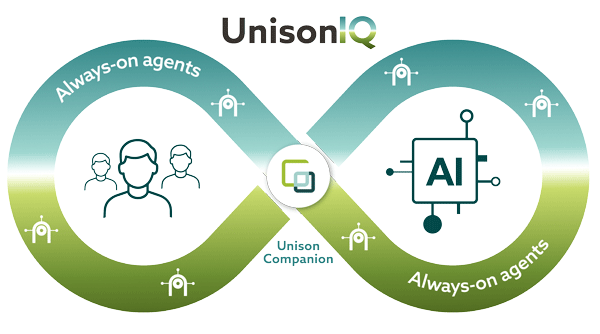
Unison Decision‑Centric planning is built on Unison Planning™ and orchestrated by UnisonIQ, bringing decision-centric principles into daily operations across complex, global supply chains.
It combines:
- Advanced AI and optimization engines
- Real‑time scenario modeling
- Explainable, trusted AI
- Human validation and cross‑functional collaboration
AI augments planners. It doesn’t replace them. Every decision stays transparent, auditable, and aligned with business goals.
Real results in practice
At Evonik Oxeno, a leading producer of C4 chemicals, Unison Decision‑Centric Planning transformed how the organization responds to disruption. Teams moved away from spreadsheet‑driven firefighting toward scenario‑based decision preparation, running hundreds of scenarios every week and dozens of solver runs every day.
The result? Faster decisions, stronger alignment, improved performance, and resilience at scale.


“By shifting from process-centric to decision-centric planning powered by OMP’s Unison Planning, we now run hundreds of scenarios, improving decisions and performance.”
David Kochanek, Supply Chain Solution Manager at Evonik Oxeno
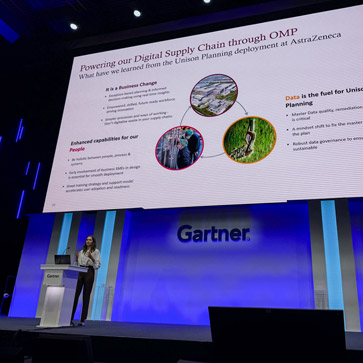
AstraZeneca’s journey to decision-centric autonomous planning
“Moving to a synchronized, decision-centric planning environment isn't just a technology upgrade; it's a fundamental change in how we make decisions at scale.”
— Diane Gorman, Network Supply Planner, AstraZeneca

Scenario-based decision-making
"Decision-centric planning has reinforced trust in the system among planners and executives. With scenario-based decision-making, we can respond faster and improve performance.”
— David Kochanek, Supply Chain Solution Manager at Evonik Oxeno

How P&G is building the supply chain of the future, one decision at a time
“The future we're designing envisions an empowered workforce focused on elevating supply chain performance versus daily routine tasks.”
— Daniela Cima, SVP One Supply Transformation, P&G

The self-driving supply chain
“We are much more predictive, much more responsive, and much more autonomous than we’ve ever been.”
— Adis Sulejmanović, Head of Digital Supply Chain Transformation & Strategy at Kraft Heinz
Boosting agility and sustainability
“Supply chain teams are drowning in data but starving for insights. This is about surfacing the right insights so better decisions can be made faster.”
— Lachelle Buchanan, Product Marketing Manager & Tom Wouters, Chief Product Officer

Antifragile supply chains
"When faced with uncertainty exposure, organizations with dynamic decision processes are 4.9 times more likely to impact their revenue positively.”
— Gartner Antifragile Supply Chain Management Survey
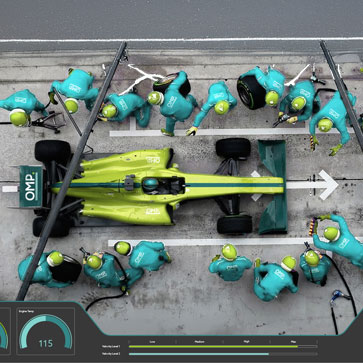
Blog: Decision velocity for supply chain leaders
Why making better decisions faster has become a strategic advantage.
Read the blog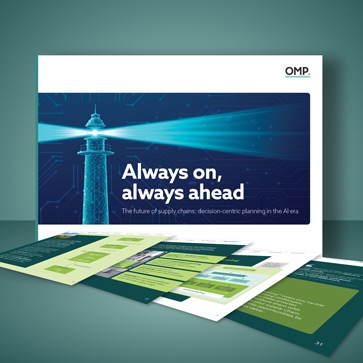
E-book: Always on, always ahead
The full framework for decision‑centric planning, with industry examples.
Download the e-book
OMP unveils decision-centric planning
Learn how OMP is redefining supply chain-decision making to accelerate decision velocity.
Read the press release
Blog: How to stop firefighting in chemical supply chains and protect margins
Learn how you too can move to decision readiness.
Read the blogReady to see what decision-centric planning looks like in your organization?
Start the conversation today
Talk to OMP. We'll help you understand where your decision readiness gaps are — and what it takes to close them.