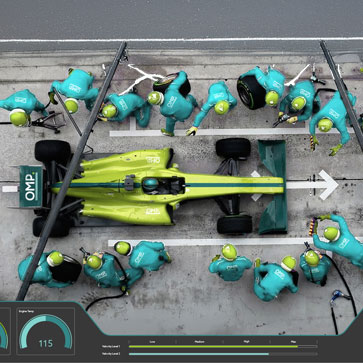
How to stop firefighting in chemical supply chains and protect margins
Robbert De Looff - March 19

Imagine planning your annual production when a geopolitical event disrupts raw-material supply, forcing your team back into reworking forecasts, renegotiating allocations, and reassessing margin exposure. Too often, planning still follows fixed cycles and static assumptions, sending teams rushing to rebuild spreadsheets and align numbers before a clear decision can be made.
Leaders pulling ahead do not simply accept uncertainty. They anticipate it, mapping out potential scenarios in advance so they can respond quickly when events unfold.
Why calendar-based planning struggles under pressure
In chemical supply chains, volatility rarely affects just one dimension. Market shifts immediately interact with physical and financial constraints. Fixed assets, grade changeovers, storage limitations, logistics capacity, and contractual commitments all shape what is feasible.
Yet many planning processes still separate these realities. Commercial scenarios are evaluated without a clear view of operational constraints. Operational adjustments are made without fully understanding margin or service implications. This disconnect slows decisions and increases risk at the point where margin and service are on the line. For planning teams, it often means long hours spent reconciling numbers, while decisions wait.
Moving from firefighting to decision readiness
Scenario-driven planning moves teams out of reactive mode and into preparation. Instead of responding to disruption after it occurs, teams prepare response options in advance and keep them up to date as conditions evolve. This is the foundation of decision-centric planning, an approach that shifts the focus from producing plans to making better, faster decisions.
Blog post
Planning teams can explore questions such as:
- What if propylene prices fall again next quarter and margins shift between commodity and specialty grades?
- What if shipping delays add a week to exports heading to Asia, increasing inventory pressure at constrained storage sites?
- What happens to service levels and profitability if a key customer renews volumes or exits unexpectedly?
Each scenario links market changes with operational constraints and translates them into financial outcomes. Margin impact, service risk, and inventory exposure become visible early, before decisions are forced under pressure.

Blog post
How scenario modeling shifts decisions from reaction to action
Blog post
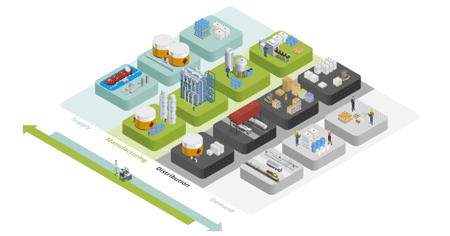
Here, teams turn to a digital twin of the value chain to ground decisions in reality. By combining commercial, operational, and financial data into a single live model, teams can test scenarios consistently and quickly.
Planners can step away from spreadsheets to focus on evaluating trade-offs, and recommending actions that move the business forward. Sales, operations, and finance work from the same assumptions and data. When conditions evolve, teams are not scrambling for answers. Instead, they execute options that have already been designed, tested, and aligned.
Blog post
Companies adopting continuous, scenario-based planning often cut planning turnaround time dramatically. Instead of waiting for the next monthly cycle, teams adjust plans in hours when market conditions change, protecting margins while maintaining service levels.
What leaders gain when decisions are prepared
The value of scenario-driven planning is not speed alone, but the confidence to act without second-guessing.
In practice, this translates into:
- Shorter planning cycles and less manual effort for teams
- Stronger alignment across commercial, operational, and financial functions
- Clear visibility into margin and service trade-offs before committing
- The ability to act deliberately instead of reacting under pressure
While you may not be able to predict every disruption, you can prepare for it. With scenario thinking embedded into your planning culture and supported by a live digital twin, uncertainty becomes manageable rather than overwhelming.
Ready to move beyond firefighting?
If your teams are still spending critical time reacting to the next disruption, it may be time to rethink how decisions are prepared.
Explore how scenario-driven planning helps leading chemical producers move beyond firefighting and protect margins, service, and confidence when conditions change.

Robbert De Looff
Commercial Lead Chemicals at OMP BE
Biography
Robbert is dedicated to maximizing the value of OMP's chemical solution for customers, striving for optimal efficiency every step of the way. Driven by a passion for sustainability and a fascination with optimization and value realization, he's always on the lookout for groundbreaking industry solutions to tackles challenges head-on.