Inside Bayer's global planning rebuild and AI roadmap: faster decisions at scale
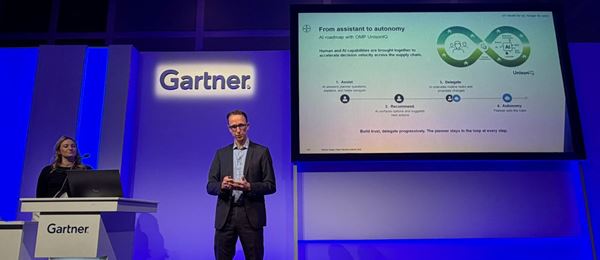 At the Gartner Supply Chain Planning Summit in London, Mirja Meyer, Principal Product Manager and Program Lead, and Karsten Hahm, Program Lead OMP Implementation, shared how Bayer is rebuilding planning across its Pharmaceuticals and Consumer Health supply chain. Bayer’s Olympus program is replacing a fragmented planning landscape with OMP's Unison Planning™, designed for better, faster, and more value-driven decisions.
At a glance
- Industry: life sciences (pharmaceuticals and consumer health)
- Scope: 30+ production sites, 80+ affiliate and warehouse locations, 300+ contract manufacturers
- Technologies: API production, bulk, packaging for solids and liquids, biotech, medical devices
- Live today: demand planning in ~100 countries · tactical planning across ~35 brand families · operational planning at 13 sites
- Next: operational planning rollout to the Americas, then APAC; first AI use case with Unison Companion
"Olympus is a lot more than replacing our old planning system. It's a key enabler of our end-to-end strategy."
– Mirja Meyer, Principal Product Manager and Program Lead, Bayer.
Two planning horizons, one of them without a system
Key takeaways
- Start where the gap is widest. Bayer's tactical planners had never had a planning system, so Bayer gave them one first, a year ahead of operational planning.
- Design for adoption. One standardized template, a buddy program, monthly maturity tracking, and permanent master data stewards made the change stick across sites of very different maturity.
- Get the data right before AI. Bayer's AI roadmap with OMP starts with master data, then supports planners with answers and recommendations, and automates routine decisions only once planners trust the results.
Bayer plans on two horizons. Operational planning runs close in and site by site: what gets made, in what sequence, on which line, and how it moves. Tactical planning looks further out and across the whole network for a brand family, weighing cost, cash, and service against each other rather than optimizing any single plant.
Bayer had planners on both horizons, but only the operational planners had a planning system. As Mirja Meyer put it, the tactical planners responsible for the end-to-end view "never did have a planning tool."
In practice, that meant collecting input from sites, consolidating it by hand, and reporting it out in spreadsheets and slide decks. The people accountable for the widest view had the weakest tooling, and neither horizon could see the other.
Rebuilding against the playbook
The conventional order is operational first, tactical afterward: get the plants planning properly, then layer the network view on top. Bayer debated it at length and went the other way. Tactical planning started in late 2022, while demand planning was still rolling out, and a full year before operational planning.
That meant turning consolidators into planners. Bayer paired each new user with an experienced project colleague through a buddy program and tracked maturity monthly via self-assessment, so that roadblocks surfaced while they were still fixable.
Master data quality varied widely across sites, and the open question was how to maintain it at a high level after go-live. A dedicated workstream tackled it during the project. Master data stewards for each process area now oversee the data landscape and serve as the counterpart to operational key users for fundamental changes.
What planners value most today
Bayer summed up what its planners value most about working in Unison Planning™, role by role:
- End-to-end supply network managers: a brand's complete network in one system, with scenarios and financial KPIs rather than volume alone.
- Demand planners: statistical forecasting that now accounts for sell-in and sell-out conversion.
- Operational supply managers: a Sales and Operations Execution (S&OE) dashboard Bayer built that shows quantity, number of days, financial impact, and product priority, to decide which brands and countries come first when supply is short.
- Operational production planners: solvers that take capacity constraints into account, which the previous optimizers did not.
- Master data stewards: all master data in one dashboard, with consistency checks, outlier detection, and less manual maintenance through automated rules.
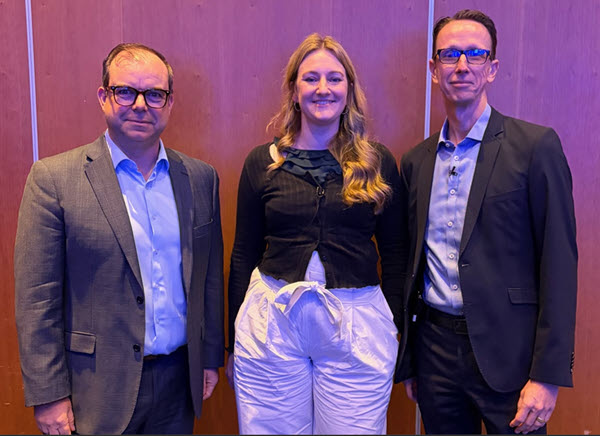
"The biggest benefit of Unison Planning is the joint source of truth that helps our planning teams to achieve reliable outcomes.”
– Karsten Hahm, Program Lead OMP Implementation, Bayer.
From planning foundation to AI
The rebuild also sets Bayer up for what comes next. AI depends on connected planning layers and data that planners can rely on, and Bayer now has both taking shape. Karsten Hahm described master data as the foundation for every benefit the system delivers, so that is where Bayer's AI roadmap with OMP begins.
The first step is rolling out Unison Companion, part of UnisonIQ, the AI capabilities built into Unison Planning™. It flags missing and inconsistent data for master data stewards, handles repetitive setup work, and answers planners' questions within the system using Bayer's own training materials.
From 2027, Bayer and OMP will co-create AI use cases around the questions planners escalate today: how to allocate constrained supply, which SKUs drive excess inventory, which production sequence minimizes lost sales, whether expediting is worth the cost, and which alerts need attention first.
Just as it started with tactical planning, Bayer is getting the data in order before asking AI to act on it. That is the transferable part: use AI first to support planners with answers and recommendations, and automate routine decisions only once planners trust the results.