Decision-making at the speed of change
May 20
What separates leaders from laggards
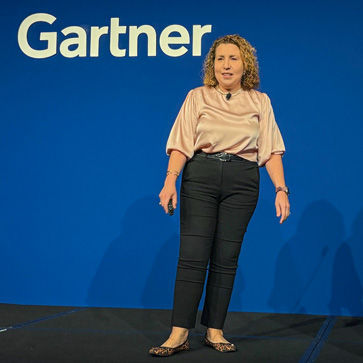
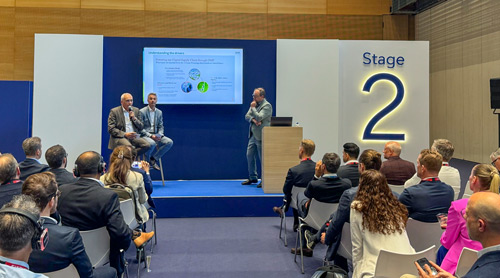
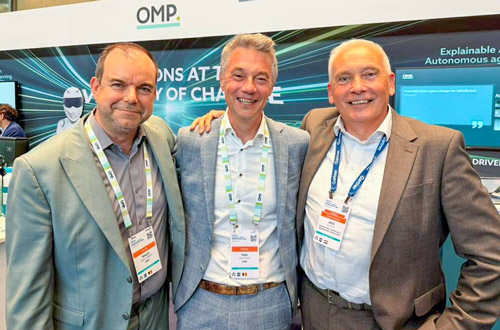
Markets move in hours. Planning cycles don’t. In this Gartner Supply Chain Symposium/Xpo™ Barcelona theatre session, our panelists Jack Eggels, Tom Wouters, and Philip Vervloesem went behind the scenes. They shared what the main stage couldn’t: the real turning points, the hard operating-model calls, and the human dynamics that decide whether decision-centric planning sticks at a global scale.
The real gap is decision latency
Case study
Most organizations don’t lose because they lack data or tools. They lose because decisions take too long to make, too hard to explain, and too slow to operationalize. The session focused on how leaders build decision velocity as an operational capability: aligning on the decisions that matter, anchoring them to enterprise value, and creating an execution path that works even as the plan keeps changing.
“Decision velocity isn’t just a capability you buy; it’s one you build, decision by decision.”— Philip Vervloesem, OMP
Case study
What transformations really look like: the "messy middle"
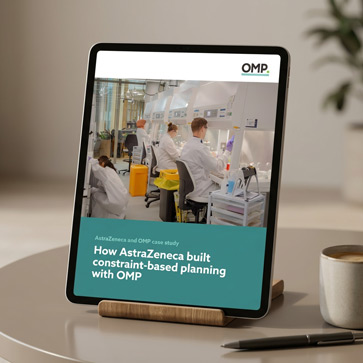
AstraZeneca’s story resonated because it showed the scale of change required to shift from fragmented planning to a connected way of working. The reality is that progress is rarely linear. The panel highlighted the “messy middle”: early resistance, workflow redesign, and the moment teams stop firefighting and start trusting the system.
What leaders do differently:
- Start with pilots that mirror real complexity. Small enough to learn fast, realistic enough to scale.
- Staff the transformation with your best business talent, not whoever is available. Credibility drives adoption.
- Secure visible executive champions and keep them engaged beyond go‑live.
“Think global, start with a pilot that has the same characteristics as the bigger problem, and put your most respected people on it. Credibility is a success factor.”— Jack Eggels, former Shell
Make decision velocity real: shift from plans to decisions
The session made a clear point: events don’t wait for the next planning cycle, leaders don’t either. The session drew a clear distinction between organizations that manage plans and those that orchestrate decisions. Decision-centric organizations separate decisions from plans so they can move fast, stay resilient, and keep a trace of what was decided and why.
What “always-on” looks like in practice
- Capture events as they happen, risk or opportunity.
- Assess impact fast using integrated KPIs and constraints.
- Compose and compare scenarios without rebuilding the plan from scratch.
- Collaborate in context and document decision rationale for explainability and learning.
- Apply decisions to the plan while keeping the decision logic persistent as conditions change.
“Events happen. They don’t wait for the next planning cycle. Decision-centric planning captures the event, simulates responses, documents why you choose one, and then applies the decision to the plan.”— Tom Wouters, OMP
Human and AI: the breakthrough is orchestration
Case study
The panelists emphasized that AI value doesn’t come from replacing planners. It comes from rebalancing work: AI agents provide focus and insights; humans bring context, steer trade-offs, and explain decisions.
That orchestration is the core of UnisonIQ: a framework that combines forecasting, optimization, MEIO, ML, and LLM/LRM capabilities into a decision workflow that continuously learns from both system signals and human input.
What changes for planners
- From manual plan-building to scenario steering and exception management.
- From “spreadsheet reconciliation” to decision explanation and accountability.
- From optimizing everything to focusing on the few decisions that drive most outcomes.
Case study
Wondering where your organization sits on the path from AI-assisted to AI-driven planning?
Build future-ready teams that can sustain the change
The panel was blunt: transformation is “won or lost” on adoption. Sustained impact requires leadership commitment, intact expert support teams beyond transformation, and mechanisms to ensure knowledge survives organizational and leadership transitions. Adoption is measured continuously, not just at rollout.
What leaders put in place
- Visible leadership commitment that stays active, month after month.
- Expert support teams kept intact long enough to reinforce the new way of working.
- Adoption measurement with usage analytics and adherence KPIs.
- Training and certification to build AI‑augmented planning skills.
Start building decision velocity
If the session left you with one practical question "where do we begin", the panel's answer was consistent: start with the decisions, not the technology.
If you want momentum, here’s the path the panel advocated:
- Identify the decisions that matter most, the few that drive the majority of outcomes.
- Anchor them to one enterprise value metric so trade-offs are consistent.
- Design the human+AI workflow intentionally: what should be automated, what needs human judgment, and how the handoffs flow.
- Pilot with real complexity, then scale with champions and proof.
Step into the driver’s seat
Want to explore more on decision-centric planning and UnisonIQ?