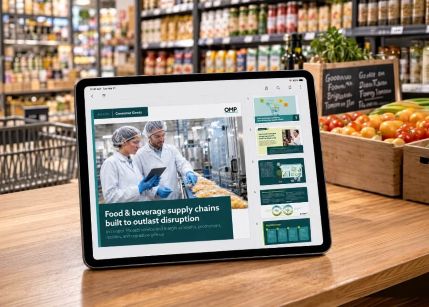
Food & beverage supply chains built to outlast disruption
eBook
Protect service and margin when loyalty, promotions, retailers, and regulation keep moving.
eBook
Why do food and beverage supply chain plans fail?
The promotion is approved. The volumes are agreed. The plan looks right. Then a retailer changes its order, a campaign runs hotter than forecast, or a seasonal pack sits unsold in January. The plan was built on assumptions about demand, not on what the plant, the warehouse, and the shelf life could actually support.
None of it shows up as a single failure, which is exactly why it survives. It shows up as service levels that slip, waste nobody budgeted for, and margins that leak away one promotion at a time. And it lands on the same desk every time: planners rebuilding by hand what the system should have caught, instead of spending the day on the decisions no system can make for them.
eBook
Reality-based planning: every sales action grounded in operational fact
Reality-based planning grounds the plan in what is true, not what was assumed. A digital twin of the supply chain carries the constraints that actually bind: raw materials, bulk assets, packaging lines, transport, labeling, and remaining shelf life. Sales and supply work from one current picture, so a scenario tested in the morning is either feasible by the afternoon or visibly isn't.
What's inside the e-book
- Why promotions, launches, and retailer dynamics create complexity that traditional planning was never built for
- How reality-based planning grounds every sales action in raw materials, capacity, transport, and shelf life
- Why tightening regulation adds SKUs and constraints differently in every subsegment, from allergen labeling to excise, traceability, and origin certification
- How AI agents detect demand surges, supply constraints, and inventory risks as they emerge, and put the options in front of a planner in time to act
- Why the planning pressure is the same across food, beverage, coffee, meat, and beer & spirits manufacturing, although the products are different
Proven across food and beverage manufacturing
Global food and beverage manufacturers are already planning this way, including Nestlé, Alpro, Duvel Moortgat, and P&G. They are running promotions, launches, and replenishment against one reality-based plan instead of reconciling spreadsheets after the fact.
How Unison Planning™ for Consumer Goods works
The e-book shows how OMP's Unison Planning™ for Consumer Goods builds the plan on a digital twin of the supply chain. Demand-side scenarios and supply-side constraints are run in a single model, so planners can see the trade-off they're accountable for while there's still time to act.
UnisonIQ works on top of that: always-on AI agents watch for risks as they surface, generate options, and explain the reasoning and trade-offs in plain language before anything is committed.