More value from every drop: the milk valorization decisions that matter
Anse Mertens - September 9
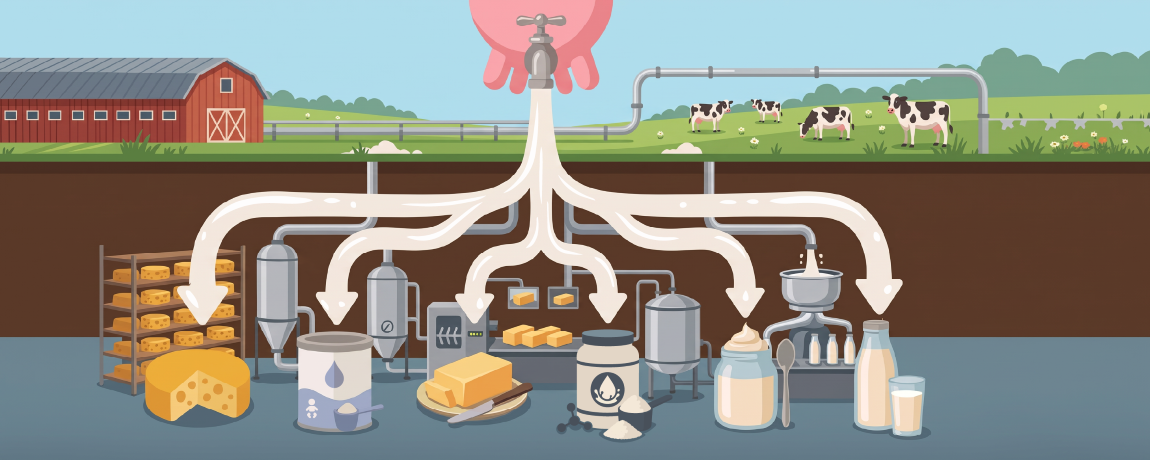
“Cows are not very good listeners. They tend to produce milk whether we need it or not.”
I keep coming back to this quote from Tomaz Vrabec of Land O’Lakes. He said it in a webinar a while back, and it’s stuck with me ever since, probably because it sums up something every dairy business leader already knows in their gut: dairy companies can’t simply adjust supply based on demand. Milk keeps flowing whether the market wants butter, powder, cheese, or none of the above that week. Every drop has to go somewhere, and the real planning challenge is making sure it goes to the most valuable place possible.
Where the pressure really hits home
In my conversations with dairy leaders, this is where the pressure becomes very real. Critical decisions have to be made across the supply chain, almost in real time. Where do we allocate incoming milk today? Where should we reserve capacity, just in case? Which customer or product priorities should we protect?
And honestly, the difficulty is rarely a lack of effort or expertise. It’s that decision-making is often fragmented across functions, horizons, and systems. Demand planning doesn’t always fully reflect milk availability. Production plans can miss the shelf-life pressure building downstream. Milk allocation might fix a short-term volume issue while quietly wrecking margins somewhere else.
In a tightly coupled dairy supply chain, each choice can cascade into stockouts, obsolete products, excess transfers, avoidable waste, or missed opportunities.
Faster reactions and better trade-offs
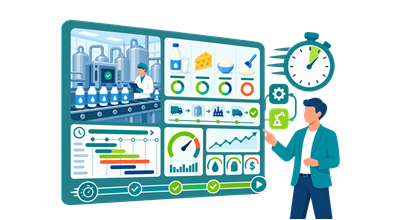
It’s clear that dairy companies need to speed up their decision-making. But I don’t think the goal is to simply react faster to every disruption that comes along. The real challenge is spotting the critical trade-offs that create the highest value from the same supply and making the right decisions as early as possible. That takes an end-to-end view of the planning problem. Dairy companies need to optimize production capacity, by-product flows, storage, and logistics together, not as separate problems.
Truth is, this logic isn’t unique to dairy: Anywhere supply, assets, constraints, and demand are this tightly connected, you can't plan decision by decision in isolation. You need to account for the full picture: actual supply, real demand, and shelf-life or availability limits, all at once.
Decisions need to be economically sound and operationally feasible
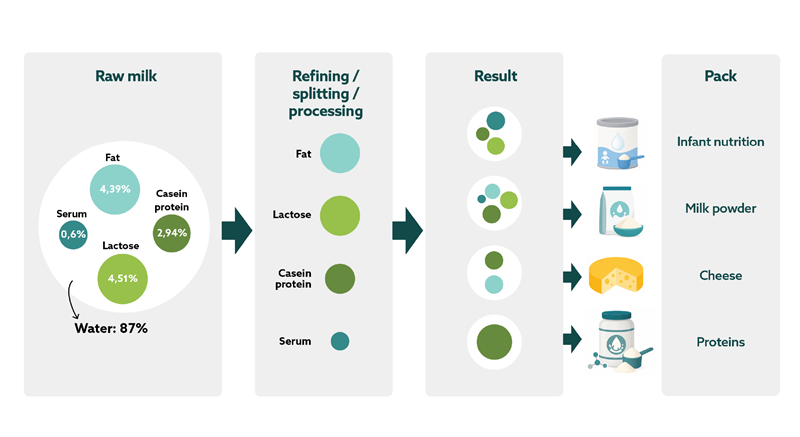
For dairy, this becomes especially clear in milk valorization. Raw milk isn’t a uniform input. It’s a variable mix of fat, protein, dry matter, and other components that can flow into different products, by-products, and markets. Its real value depends on how you allocate those components:
- Should more volume go into fresh dairy, cheese, powder, cream, whey, or higher-value ingredients?
- Which choice protects service, respects your constraints, and maximizes contribution margin?
In dairy, product mix, component balancing, by-product flows, and margin logic are inseparable.
Shelf-life constraints also ripple through the chain:
- Overproduce, and you’re starting at obsolete stock, markdowns, or waste.
- Underproduce, and you’ve lost sales and dented your service levels.
With so little room for buffer against mistakes, leaders need planning decisions that aren’t only fast, but also economically sound and operationally feasible.
That’s actually a useful test for any industry: if a decision looks great in one function but quietly creates cost, waste, or service risk somewhere else, it’s not really a good decision yet.
The decisive shift: making decisions with greater confidence
Technology helps by cutting through decision noise. Smart optimizers, dynamic bills of material, shelf-life planning, and digital-twin capabilities can process complexity at a scale manual planning can’t match. But I don’t believe the real value is automation for its own sake. It’s about freeing up human judgement to focus where it matters most, especially upstream, in milk balancing.
Planners shouldn't be spending their days reconciling disconnected spreadsheets or chasing down every exception by hand. They should be able to compare milk allocation scenarios side by side, understand the trade-offs in front of them, and make informed calls with clear visibility into what it actually means, operationally and financially.
What I find genuinely encouraging is that leading dairy companies are already making this shift happen. Land O'Lakes puts the ambition plainly: it's not simply about reacting faster, it's about streamlining decision-making and making fewer, better decisions earlier in the process. With improved orchestration, the company has reported faster and more confident decisions, less aged inventory, less milk dumping, and fewer transfers between facilities.
FrieslandCampina shows the same principle at scale, using integrated planning to optimize milk valorization all the way from strategic scenarios down to operational scheduling, while also improving forecast accuracy and tank utilization.
The real prize: more value from the same milk
For me, these examples point to a bigger lesson for leadership:
Many planning problems aren’t really supply problems or demand problems. They’re decision problems.
When choices are connected, visible, and grounded in economics, planning earns trust because it stops being a negotiation between functions and becomes a way to protect value across the business. Service improves, waste decreases, operations stabilize, and margins stop being something you defend and start being something you actively plan for.
The companies that win won’t be the ones making every decision faster. They’ll be the ones who know which decisions actually matter, make them earlier, and make them with the full value chain in view. That, to me, is the essence of better planning: fewer decisions, better decisions, and stronger outcomes from every single drop of milk.

Anse Mertens
Senior Presales Consultant
Biography
With a background in both project delivery and presales, Anse has developed a strong blend of functional expertise and business insight. She focuses on understanding the challenges that consumer goods companies face, sharing industry best practices, and demonstrating how smarter planning decisions lead to better margins.